
Weather Barriers Built for Coastal Climate Cycles
Siding Services in San Jose for buildings showing moisture damage behind exterior walls or outdated materials failing in seasonal weather shifts
Siding that looks intact from the street often conceals moisture intrusion happening at seams, corner joints, and transition points where different materials meet. All Weather Roofing installs and repairs siding systems for residential and commercial properties where the barrier between interior structure and exterior weather has degraded or was never properly integrated with roofing and foundation elements. Material selection accounts for exposure to both dry summer heat and winter moisture cycles that expand and contract different siding types at different rates.
Effective siding protects structural framing from moisture that enters through failed caulking, improper flashing, or panels that have warped away from sheathing underneath. The installation process includes establishing a drainage plane behind the siding surface itself so that any water penetrating the outer layer still drains down and out rather than sitting against wood or insulation.
Arrange a consultation to assess current siding condition and review material options suited to your building type and exposure in San Jose, Atherton, Santa Clara, and surrounding areas.
What Proper Siding Installation Requires
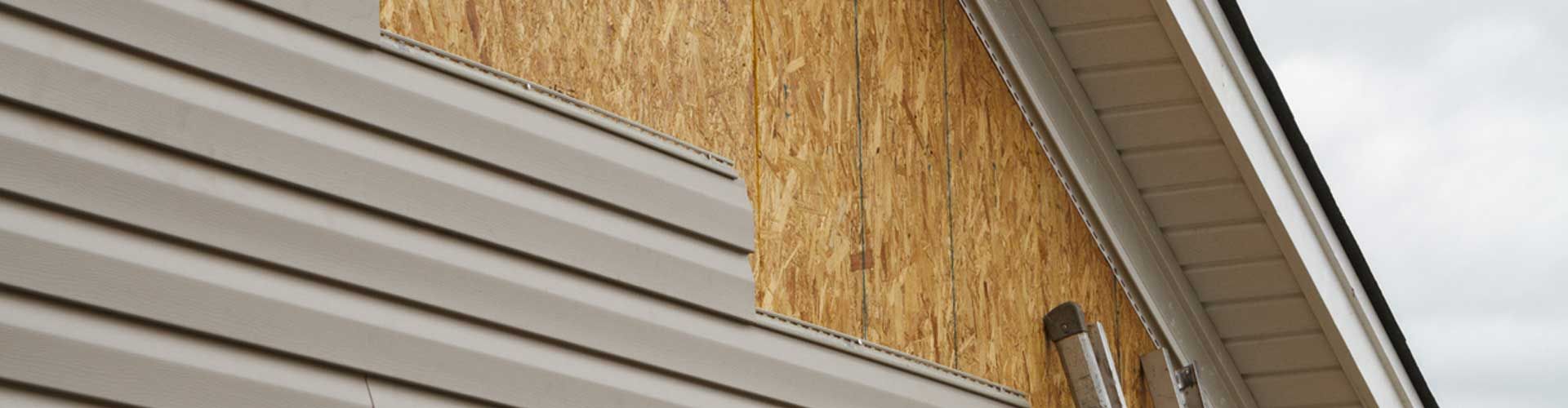
Installing siding correctly means accounting for thermal movement, ensuring each panel or board can expand in heat without buckling and contract in cold without pulling fasteners through the material. Fastener placement, depth, and spacing follow manufacturer specifications that vary significantly between vinyl, fiber cement, wood, and metal siding types. Corners, window trim, and roof transitions require flashing sequences that layer correctly so water moving down the wall surface never finds a horizontal edge to slip behind.
Once the work is complete, you'll see consistent reveal lines, tight corner joints, and uniform panel alignment that wasn't possible with the previous installation. Energy performance often improves measurably when gaps behind old siding are sealed and new material installs flat against properly prepared sheathing. All Weather Roofing coordinates siding work with roofing and gutter systems to maintain continuous protection across all exterior transitions.
Material choices affect maintenance intervals and longevity, with fiber cement offering fire resistance and dimensional stability while wood requires periodic refinishing but allows for easier repairs of isolated damage. The decision depends on your priorities around appearance, upkeep commitment, and budget for both installation and long-term maintenance.
Common Questions About Siding Projects
Property owners considering siding work typically want to understand materials, process steps, and functional improvements beyond appearance.
What causes siding to fail before the expected lifespan?
Improper installation that traps moisture, missing or incorrectly layered flashing at transitions, and fasteners driven too tight create stress points where materials crack or pull away prematurely.
How does new siding improve energy efficiency beyond just appearance?
Proper installation eliminates air gaps where conditioned interior air escapes and adds a continuous thermal barrier when paired with underlayment that wasn't present or had degraded in older assemblies.
What's included in a complete siding replacement versus repair?
Replacement includes removing old material, inspecting and repairing sheathing damage, installing weather-resistant barriers, and integrating flashing at all openings and transitions, while repairs address isolated damaged sections without full tearoff.
When should siding work happen relative to other exterior projects?
Siding integrates with roofing at the top and foundation elements at the bottom, so sequencing matters—roofing typically precedes siding to establish proper water-shedding layers from top down.
Why do material costs vary so significantly between siding types?
Fiber cement costs more than vinyl due to weight, cutting requirements, and fastener specifications, while wood varies based on species and whether it arrives primed or requires full finishing after installation.
All Weather Roofing evaluates your building's current siding performance and underlying sheathing condition before recommending materials or scope. Request a detailed estimate based on your property's specific configuration and exposure conditions.